There is no doubt that Upper Hutt, like many growing areas, needs additional housing. Developments such as Silverstream Forest promise new homes, investment, and the opportunity for more people to enjoy this part of the region. That is something many of us can support in principle.
However, the scale and nature of this particular proposal invite a deeper conversation about what kind of growth our community actually wants – and what it may cost us over time.
For those who live in Silverstream and Pinehaven, this development is not abstract. It has the potential to significantly reshape these communities, with some estimates suggesting it could effectively double the number of homes in these areas. Recent strategic discussions highlight that Silverstream already faces material pressures, including congestion on State Highway 2, reliance on constrained links such as the Silverstream Bridge, and limits in public transport capacity. If these pressures already exist, what confidence do we have that infrastructure can keep pace with growth of this scale? And how will aspirations such as resilience and emissions reduction be realised in practice, rather than remaining purely strategic intent?
Beyond infrastructure, there are equally important – if less tangible – questions about the impacts on the character and social fabric of these communities. Many people have chosen to live in Silverstream and Pinehaven because of their environment, their pace, and their sense of space and connection to nature. A development of this scale will inevitably change those dynamics. The question is not whether change should occur, but whether it is being approached in a way that genuinely recognises and respects what already exists and the reasons people value it. What will be gained – and just as importantly, what may be lost?
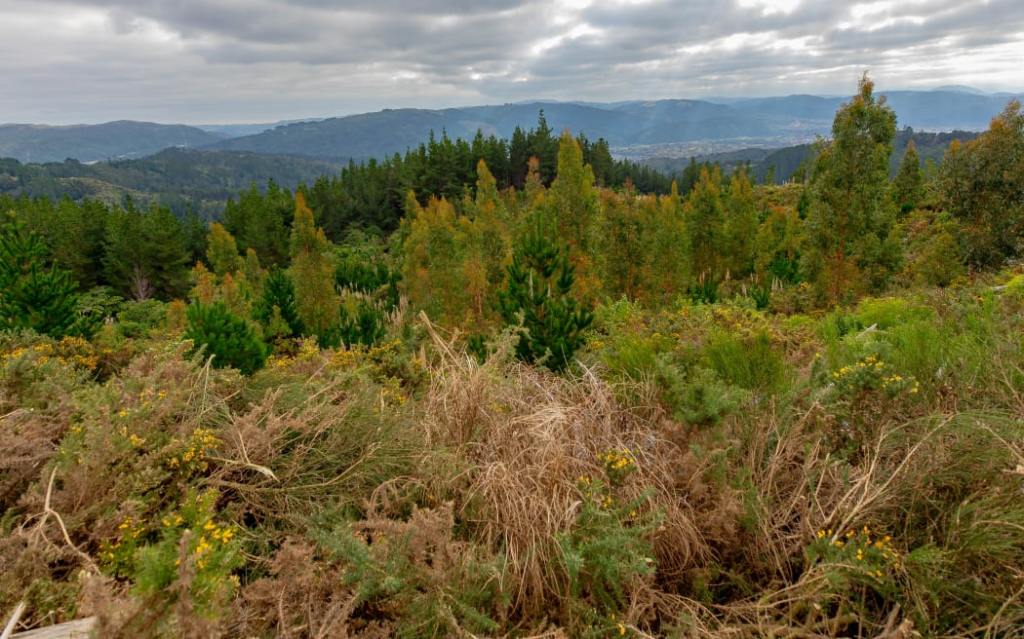
Environmental considerations also deserve careful and sustained attention. The proposed roading through the Silverstream Spur would pass through an area that, while currently pine-dominant, contains regenerating native biodiversity. This raises questions not only about the immediate footprint of the road, but about wider ecological processes that could be disrupted. If there is a long-term community aspiration for this area to become a significant biodiversity and recreational asset, how do we reconcile that with the permanent fragmentation that a road will introduce. Once altered, these environments are not easily restored, and the cumulative impacts – through habitat disruption, increased predator pressures, and greater fire risk associated with expanded housing – are likely to be felt over time rather than immediately.
I also raise some concern about how the level of community support has been characterised. Promotional material suggests strong backing, while describing opposition as being limited to a very small number of people (“a dozen or so”). That framing risks being both dismissive and reductive and does not sit comfortably with the expectation of respectful community engagement. It raises a simple but important question: how has this level of support actually been assessed? For a development of this scale, it is reasonable to reduce differing views to such a narrow portrayal, or should we expect a more transparent and balanced account of community sentiment? Minimising concerns does not resolve them – it risks undermining trust in the process itself.
None of this is to suggest that development should not proceed. Rather, it is to suggest that this proposal – because of its scale, its location, and the terrain it traverses – is not easily comparable to others. It presents a unique and complex set of trade-offs between housing, infrastructure, the environment, and community character. It is, in many respects, unique, and should be treated as such. Can we confidently apply lessons from elsewhere, or does this development require a more tailored and cautious approach?
As a community, this is an opportunity – perhaps a necessary one – to pause and ask some harder questions. Are we confident that infrastructure and services will keep pace? Do we fully understand the environmental implications, particularly for areas like the Silverstream Spur? Are we comfortable with the trade-offs being made between housing, open space, and biodiversity? How will our daily lives and local character change over time? And are we satisfied that all voices are being fairly and accurately represented in the conversation?
Good development can enhance a community. But that outcome is not automatic – it depends on careful planning, honest engagement, and a willingness to confront complexity rather than simplify it. These are not easy discussions, but they are essential ones. The decisions made now will shape these communities for decades to come and deserve to be approached with that in mind.
A “thank you” to Barry Wards for sending this letter to The Upper Hutt Connection.
12/06/26

