ngahere: (noun) bush, forest. – Māori dictionary
Upper Hutt has an ambitious vision for its future: a “city in the ngahere”, where people and nature thrive together. It’s a vision worth embracing. But if those words are to mean anything, we need to ask harder questions about what happens as our city grows.
Upper Hutt has something many cities would dearly love to have.
A city can look green while nature is disappearing
We tend to think of environmental loss as something dramatic: a forest is cleared, a wetland is drained or a stream becomes polluted. But biodiversity can disappear much more quietly. A patch of native vegetation disappears here, another becomes isolated there, mature trees die without young trees replacing them, and weeds and pest animals steadily weaken what remains.
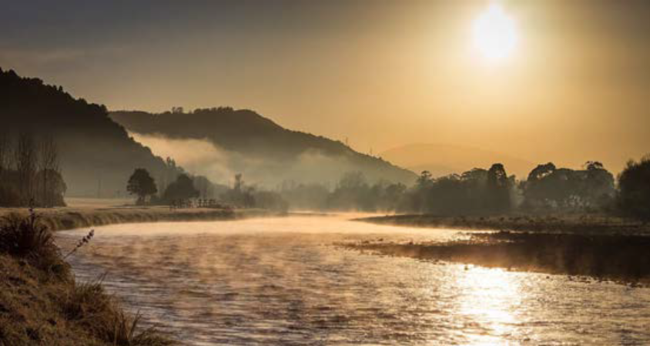
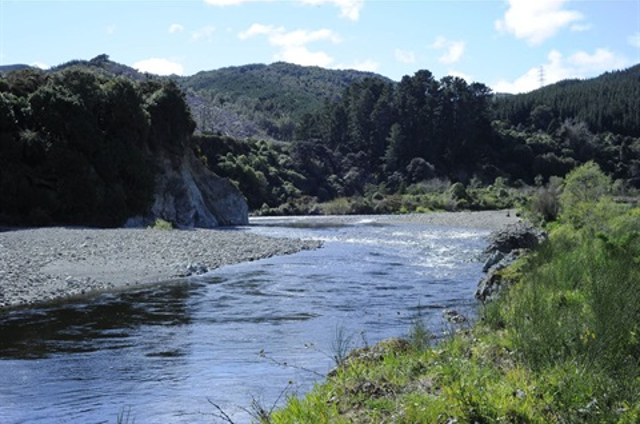
A stream can be squeezed between development until it gradually functions more like a drain than a living ecosystem. No single event looks catastrophic, yet piece by piece the ecological fabric joining the landscape together begins to unravel. Because there are still plenty of trees around us, we can convince ourselves everything is fine. That’s the uncomfortable issue Upper Hutt needs to confront: a green city is not necessarily a biodiverse city, and a city surrounded by forest is not necessarily a city in the ngahere.We live alongside Te Awa Kairangi, native bush still wraps around much of our valley, and streams flow from the surrounding hills through our neighbourhoods. Tui and kereru are part of everyday suburban life, and within minutes of the city centre we can be walking beneath native forest.
Upper Hutt City Council’s own vision says: “We have an outstanding natural environment, leisure and recreational opportunities, and we are a great place for families to live, work and play.” Its environmental community outcome goes further: “We’re immersed in natural beauty. We care for and protect our river, our stunning parks, and our natural environment.”
Now, as Council develops its new Open Space Strategy, it’s also inviting us to imagine a future “city in the ngahere”. These are powerful promises. But there’s a danger:
“City in the ngahere” could become a description of what Upper Hutt looks like rather than a commitment to what its natural environment will actually become.
There is a very big difference between the two.
Growth changes the equation
Upper Hutt will grow. That’s not inherently a bad thing, and this shouldn’t become a simplistic argument between housing and nature. We need homes, infrastructure and places for people to live, work and play. But growth makes the decisions we take about nature more important, not less.
As sections become smaller and development intensifies, our remaining natural spaces, streams, river margins, mature trees and patches of indigenous vegetation all become more important. Most importantly, the connections between them become crucial. Birds, fish, insects and plants don’t recognise property boundaries or distinguish between Council land, a road reserve and somebody’s backyard. Nature operates across a landscape, and if Upper Hutt is serious about becoming a city in the ngahere, we need to start thinking that way too.
So where are the ecological corridors Upper Hutt will need in 2057? Which streams need protecting and restoring? Where are the fragments of indigenous vegetation we can’t afford to lose, and where could isolated habitats be reconnected? What happens when development conflicts with one of those places? Behind all of these sits the hardest question of all: are we prepared occasionally to say no to something because protecting nature matters more? Sooner or later, a serious environmental vision requires choices.
A forest is more than trees
There’s also another trap we should avoid. We’ve become very good at counting environmental activity: trees planted, traps installed, hectares treated for weeds, kilometres of stream restored and volunteer hours worked. These things matter, but they measure what we did, not necessarily what changed.
Planting 10,000 native trees is an activity; having a healthy, naturally regenerating forest there 20 years later is an outcome.
- Installing predator traps is an activity; seeing indigenous wildlife recover is an outcome.
- Removing invasive plants is an activity; finding native seedlings flourishing beneath the canopy is an outcome.
- Restoring a stream bank is an activity; seeing ecological health improve and native aquatic life return is an outcome.
If we’re going to call ourselves a city in the ngahere, let’s measure the ngahere, not simply how busy we’ve been trying to help it.
We also need to talk about pests
This may be less appealing than pictures of children planting native trees, but it can’t be avoided. We can plant tens of thousands of trees, yet if possums browse the canopy, rats and mustelids prey on wildlife, deer prevent regeneration and invasive plants smother native vegetation, we shouldn’t be surprised when ecological recovery fails to follow. Planting without sustained pest control risks becoming an expensive way of feeding the very animals destroying the ngahere.
And here is the uncomfortable local reality: Upper Hutt City Council invests nothing directly in animal pest control. The work is largely left to Greater Wellington, community groups and residents who buy traps, clear lines and check them week after week. Their commitment is impressive, but goodwill cannot substitute for Council leadership and sustained investment across the city.
That matters because animal pest control is not an optional extra. It’s one of the basic strategies required to protect native forest, allow seedlings to survive and give birds, lizards and invertebrates a chance to recover. A Council that places an “outstanding natural environment” at the heart of its Vision cannot credibly leave a key tool for achieving that vision unfunded. If “city in the ngahere” genuinely describes an ecological ambition, pest control must move from the footnotes to the work programme and the budget.
What would success actually look like?
Perhaps this is the question we should all be asking. Imagine Upper Hutt 30 years from now: what would have to be true before we could honestly say we had succeeded? I hope the answer would not simply be, “We have more trees.”
I would hope our indigenous forests were healthier, with native seedlings appearing beneath mature trees and surviving. I would hope our streams supported healthy indigenous fish and aquatic communities; that tui and kereru remained abundant while less conspicuous species recovered too; and that invasive weeds were retreating rather than advancing.
I would hope our remaining habitats were larger, healthier and better connected, rather than surviving as isolated islands, and that children growing up in Upper Hutt encountered thriving indigenous nature in the neighbourhoods where they lived. Crucially, I would hope we could prove it. Because that raises another uncomfortable question.
But would we actually know?
We don’t need to invent an environmental standard for Upper Hutt. Council has placed one prominently at the centre of its Vision: “We have an outstanding natural environment”. This isn’t a minor supporting phrase tucked away in a technical policy. Council says, “we care for and protect our river, our stunning parks, and our natural environment.” A commitment given that prominence should carry an equally prominent obligation to define what success means, measure it, report it and be accountable for the result.
Yet when we turn to the latest Annual Report, that flagship promise effectively disappears from view. The report contains no coherent set of performance indicators that allows residents to judge whether Upper Hutt’s natural environment is becoming more or less outstanding. There is no environmental baseline, no measurable definition of “outstanding”, no clear targets for indigenous habitat, ecological connectivity, forest regeneration, freshwater ecology, indigenous species, pest pressure or restoration success, and no transparent account of progress over time. Council reports on numerous activities and services, but not on whether one of the most prominent claims in its own vision is actually being achieved.
I’ve already raised this gap with Council. Before the Annual Report was adopted, I proposed amending the recommendation so that Council would address the absence of meaningful environmental performance measures and reporting. That proposal was not taken up, and the report was adopted without any commitment to remedy the gap.
I’ll be honest: I find that frustrating.
Council itself tells us Upper Hutt has an “outstanding natural environment”. That is not decorative language. It is a highly visible promise to the community and a key test of Council’s stewardship. If Council is prepared to place that claim at the front of its vision, surely it must also place the evidence at the front of its reporting. Otherwise, “outstanding” becomes an assertion Council can repeat but the community cannot test.
That matters because the issue is no longer simply whether Council has overlooked environmental reporting. The weakness has been pointed out. The question now is whether Council is prepared to do anything about it.
How much indigenous habitat do we have, and is it increasing or decreasing? Is our native vegetation healthy and naturally regenerating? Are important habitats becoming better connected or more fragmented? What is happening to the ecological health of our streams and to indigenous birds, freshwater fish, lizards and invertebrates? Are pest animals and invasive plants retreating or advancing? What mature habitat are we losing as development occurs, and what are we gaining?
Here’s a simple test: could an Upper Hutt resident open the Annual Report, or even ask Council, and readily discover whether indigenous habitat is being retained, streams are becoming ecologically healthier, native vegetation is regenerating, pest pressure is declining or indigenous wildlife is recovering? At present, the answer is No. That’s not a minor reporting omission. The Annual Report is Council’s principal public accountability document, and Council itself says it exists to show what was delivered and how performance tracked against targets. If a headline promise in the Council Vision has no corresponding condition measures, targets or results in that document, the promise sits outside effective public accountability.
There’s a profound difference between reporting what we’ve done and reporting what happened to the environment as a result. Trees planted, traps deployed, weeds removed, money spent and projects completed may all be worthwhile, but none of those figures on its own demonstrates that Upper Hutt’s natural environment is healthier. If we can’t measure ecological condition, we can’t credibly claim ecological success. And if we don’t report it, the community cannot hold anyone accountable for failure.
What should we be measuring?
A “city in the ngahere” deserves something better than vague aspirations. So does an “outstanding natural environment”. Indeed, the latter deserves particular scrutiny because Council has chosen to make it a headline feature of its Vision. Prominence should bring accountability: a baseline, measurable outcomes, targets, assigned responsibility and regular reporting through the Annual Report.
Imagine if residents could see a simple, regularly updated State of Upper Hutt’s Environment report or dashboard. Not dozens of obscure measures that only environmental scientists understand. A small set of meaningful indicators showing us what is actually happening.
- Indigenous habitat: How much remains? How much is protected? Are we gaining or losing it?
- Ecological connectivity: Are important habitats and waterways becoming better connected or increasingly fragmented as the city develops?
- Forest condition: Is indigenous vegetation naturally regenerating? Are seedlings surviving? Are browsing pressure and invasive plants declining?
- Freshwater health: Are the ecological conditions of our streams and waterways improving?
- Indigenous wildlife: What are the long-term trends for selected birds, freshwater species and other suitable indicators of ecological health?
- Pest pressure: Are introduced predators, browsers and invasive plants actually being reduced?
- Restoration success: Are restoration projects creating functioning habitats, not merely putting plants in the ground?
No single indicator will tell us everything. Together, however, they could answer the question that really matters: Is nature in Upper Hutt actually recovering?
Over five, ten, twenty or thirty years, they would provide something equally important: accountability.
Without an environmental baseline, meaningful indicators and regular public reporting, there’s a real risk that “city in the ngahere” becomes something we can never fail to achieve because we never defined success in the first place.
A Vision that can’t be measured can very easily become a slogan that can’t be challenged.
Now imagine another Upper Hutt
There’s another possible future. We accommodate the growth, build the houses and roads, landscape the developments, provide attractive reserves and plant thousands of trees. Upper Hutt still looks wonderfully green from a distance.
Yet beneath that green exterior, indigenous habitats have become smaller and more fragmented, some streams are poorer, ecological connections have disappeared, and mature habitat has been traded for young planting. Pest plants and animals continue suppressing regeneration. There’s still plenty of trees and perhaps plenty of tui, and we still call ourselves a city in the ngahere. But the ngahere itself is poorer. That’s the future we should be trying to avoid.
This is bigger than Council
Upper Hutt City Council cannot create a city in the ngahere on its own. Much of the city’s vegetation is on private land, pest animals don’t stop at reserve boundaries, weed seeds travel across fences, streams flow through multiple properties, and ecological corridors cross a patchwork of public and private land. This has to become a city-wide project.
Council has a critical role through planning, investment, regulation, open-space management, environmental monitoring and leadership. But residents have a vital role too, as do developers, mana whenua, landowners, schools, environmental organisations, community restoration groups and businesses. The people quietly trapping rats in their backyards, removing weeds beside streams and spending winter weekends putting native plants into the ground are already part of the story. The opportunity now is to connect those efforts around something much larger: not simply more conservation projects, but ecological recovery across an entire city.
This is your chance to influence it
I’ll be honest – Council consultations don’t generally get the pulse racing. They can sound bureaucratic, technical and remote from everyday life, but this one matters. Upper Hutt City Council is developing its Open Space Strategy, which will help shape how the city’s open spaces are planned and managed over the decades ahead. The time to influence that direction is before all the difficult questions have been answered. That means now.
You don’t have to be an ecologist.
If you walk beside Te Awa Kairangi, explore our bush, walk your dog through a reserve, trap rats in your backyard, pull weeds, plant natives, watch kereru performing their slightly chaotic aerobatics over suburban gardens, or simply want your children and grandchildren to inherit a city richer in nature than the one we have today, you have a stake in this.
So have your say.
But don’t settle for telling Council, “we need more green space”. Ask for more.
- Healthy indigenous ecosystems.
- Connected habitats and ecological corridors.
- Streams treated as living ecosystems, not drains.
- Clear protection for existing indigenous vegetation as the city grows.
- An honest answer about how development and biodiversity will be reconciled when they genuinely conflict.
- Dedicated Council investment in sustained, landscape-scale animal pest control, alongside invasive plant control, with clear targets and public reporting on results.
- A clear role for mana whenua and mātauranga Maori in shaping our relationship with the natural environment.
- A meaningful environmental baseline, indicators that measure ecological condition rather than simply activity, and regular public reporting.
Above all, ask one simple question: How will we know whether nature in Upper Hutt is actually better off?
Let’s make the words mean something
There’s a lot to like about the phrase “city in the ngahere”. Upper Hutt still has something many cities have already lost: native forest close at hand, streams threaded through neighbourhoods, and indigenous wildlife sharing the places where we live. That’s our advantage, and it’s also our responsibility.
“A city in the ngahere” is a wonderful promise.
But warm words will not protect it. A city in the ngahere requires choices, investment and proof. It means protecting remaining habitat as the city grows. It means restoring ecological connections. It means measuring whether forests are regenerating, streams are recovering and wildlife is flourishing. And it means Council finally investing in animal pest control, rather than relying on volunteers and other agencies to carry one of the most important parts of the job.
The new Open Space Strategy is our chance to demand that substance. So don’t simply tell Council that you like parks, trees and green space. Ask what “outstanding” means. Ask what Council will measure. Ask where the targets are. Ask what it will invest in pest control. Ask how progress will be reported each year. And ask what Council will do when the evidence shows nature is still declining.
I’ll keep asking those questions. Not because I want another fight with Council, but because I’m not prepared to see an “outstanding natural environment” reduced to a comforting line in a Vision statement while the community is denied the evidence needed to know whether it’s still true.
Thirty years from now, nobody will judge us by how impressive our strategies sounded, how many seedlings we put in the ground or how often we used the word biodiversity. They’ll judge us by what survived, what recovered and what we had the courage to protect.
By whether native seedlings are rising beneath the canopy. By whether our streams carry more life. By whether birdsong is richer, not quieter. By whether Upper Hutt became richer in nature rather than simply larger.
That’s the promise Council has made. Now it must fund it, measure it and report honestly on whether it is being kept.
Use this consultation. Make a submission. Ask the awkward questions. Demand the evidence. Because if we stay silent, an “outstanding natural environment” can quietly become an outstanding environment we used to have.
Council will not be the final judge of whether Upper Hutt lived up to its promise.
Neither will I.
Neither will you.
The ngahere will.
Barry Wards
Chair, Forest & Bird, Upper Hutt
A “thank you” to Barry Wards for sending this article to The Upper Hutt Connection.
23/11/26

