Photo credit: A. Sheppard
Upper Hutt is surrounded by nature. But being surrounded by nature is not the same as protecting it.
Upper Hutt City Council’s vision includes having an “outstanding natural environment”, supported by an outcome that says:
“We’re immersed in natural beauty. We care for and protect our river, our stunning parks, and our natural environment.”
That’s an aspiration worth embracing. It’s also one against which we should be prepared to measure ourselves.
If we say we care for and protect our natural environment, the test is not simply how green Upper Hutt looks. The test is whether its indigenous biodiversity is being protected and recovering: whether native vegetation is regenerating, streams are becoming healthier, environmental weeds and predators are being controlled, and the habitats native species depend upon are being retained and connected.
Caring is an intention. Protecting requires action. And claiming success requires evidence.
Nature needs us
A recent article in Nature, provocatively titled Ecosystems depend on people: don’t abandon them, challenges the assumption that protecting biodiversity always means removing people from nature. Its central message is that human activity is not inevitably destructive. In some ecosystems, continuing human care and management are important to maintaining biodiversity.
In Upper Hutt, our forests, streams and river margins might look wild and self-sustaining, but much of what survives within them increasingly depends on what people do.
Do we control rats, possums and mustelids? Do we prevent invasive weeds from overwhelming native vegetation? Do we restore degraded streams and forest margins? Do we retain existing indigenous habitat? Do we maintain connections that allow native species to move through an increasingly modified landscape?
The uncomfortable reality is that simply leaving many of these places alone will not protect them.
Nature increasingly needs active guardians, not simply appreciative spectators.
We can see it happening in our own backyard
Upper Hutt already provides plenty of examples of what active guardianship looks like.
Pest Free Upper Hutt involves residents across around 25 suburbs in backyard predator control with reported catches running into many thousands of rats and possums, as well as stoats and weasels. But pest control brings a difficult reality with it: stop controlling predators and they return.
The same applies to weeds. Old Man’s Beard doesn’t stop growing because a piece of bush is environmentally important. Without people finding it, cutting it, treating it and returning year after year, it can smother regenerating native vegetation.
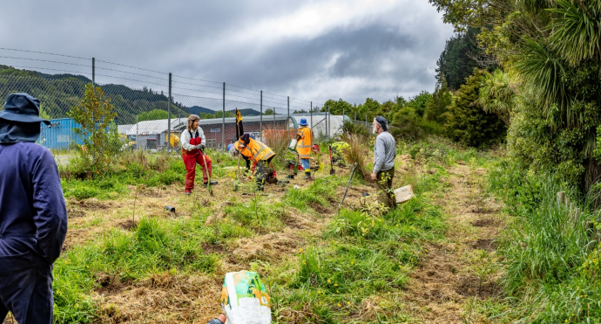
Members of the Upper Hutt Branch of Forest & Bird and Friends of Mawai Hakona Stream are among many local volunteers undertaking this sort of work, including native planting, pest control, restoration around waterways such as Hull’s Creek and Mawaihakona Stream, and Old Man’s Beard control.
At Silverstream Forest, around 30,000 native trees have reportedly been planted as former plantation areas are progressively returned to native forest. The area is also important as an ecological connection between natural areas on opposite sides of the valley.
Along Te Awa Kairangi / Hutt River, environmental planning recognises depleted biodiversity and water quality among the issues requiring active attention, including improving aquatic ecology and biodiversity along the river margins.
These are not examples of people leaving nature alone.
They’re examples of people choosing to care for it.
That’s the central lesson from the Nature article in a distinctly Upper Hutt setting: people are not separate from the task of conserving nature. In an increasingly modified environment, our continuing involvement can be essential to its survival.
Protection has to match the threats
Predator control illustrates a bigger challenge. Rats, possums and mustelids are not a peripheral environmental issue. They prey on native birds, chicks, eggs, lizards and invertebrates, and possums also damage native vegetation. Controlling them is a fundamental part of protecting a functioning indigenous ecosystem.
Yet Upper Hutt City Council currently makes no direct financial investment in animal pest control. Much of the work within our community instead relies on Pest Free Upper Hutt, community groups, individual residents and Greater Wellington.
That creates an uncomfortable contrast with our stated ambition to have an “outstanding natural environment” and our commitment that “we care for and protect” it.
This doesn’t mean Council has to catch every rat or set every trap. Nor does it mean Council should replace the considerable work already being done by the community.
It does mean that the threats we say matter need to be matched by a credible response.
If controlling introduced predators is an integral part of protecting indigenous biodiversity, we need to be clear about the scale of the problem, who is tackling it, what resources are being committed and whether the effort is enough.
Volunteers are one of Upper Hutt’s greatest environmental assets.
But there is a fundamental difference between community participation and community substitution.
Volunteer effort should strengthen an environmental programme, not become a substitute for sustained investment in one.
But restoration cannot replace everything we lose.
The same principle applies to restoration.
Planting trees, setting traps and restoring streams are enormously worthwhile. They should never become an excuse for being complacent about what already exists.
A newly planted hillside has value, but it’s not immediately equivalent to established native forest. A recreated wetland does not instantly acquire the ecological complexity of one that’s developed over generations. Planting a thousand seedlings somewhere else does not necessarily compensate for habitat lost today.
Restoration takes time. Recent research highlighted by Nature found substantial recovery of biodiversity in regenerating tropical forests over a period of about 30 years. New Zealand’s ecosystems are different, but the underlying lesson remains relevant: ecological recovery takes decades.
We cannot assume that what we lose today can simply be recreated tomorrow.
Upper Hutt will continue to change. We need homes, businesses, transport, infrastructure and recreational opportunities.
The challenge is not to stop change. It’s to make sure we understand what we have before we lose it and retain the ecological fabric that makes restoration and recovery possible.
Protection begins with knowing what we have
You cannot protect what you do not know exists.
And you cannot know whether biodiversity is improving if you don’t monitor it.
That leads directly back to Upper Hutt’s commitment that “we care for and protect” our natural environment.
How do we know whether we are succeeding?
Environmental reporting can tell us how much work has been undertaken: plants put into the ground, pests controlled, restoration work carried out, money spent or projects completed.
Those things matter – but they measure activity, not necessarily ecological outcome.
The thousands of trees that Upper Hutt Forest & Bird planted in Upper Hutt in 2025/26 is an achievement. Whether those trees survive, create functioning habitat and support recovering native species is an outcome.
The hundreds of predators Pest-free Upper Hutt trapped in 2025/26 is an achievement. Whether native birds, lizards and invertebrates consequently become more abundant is an outcome.
Stream restoration is worthwhile activity. Whether ecological health and indigenous aquatic life recover is the outcome that ultimately matters.
Investment is part of that accountability too. If predator control is necessary for biodiversity protection, public reporting should show us what control is occurring, who is undertaking it, what public investment supports it and whether ecological outcomes are improving.
Otherwise, substantial community activity can give the impression of a coordinated environmental response while much of the work continues to depend on volunteers.
If Upper Hutt is committed to caring for and protecting its natural environment, its Annual Report and other environmental reporting should enable the community to see whether that environment is actually getting healthier.
We should be able to answer some basic questions:
- How much indigenous habitat do we have, and are we retaining it?
- Are important habitats becoming better connected or increasingly fragmented?
- Are environmental weeds expanding or retreating?
- Are native birds and other indigenous species recovering?
- Are our streams becoming ecologically healthier?
- Are restoration efforts producing sustained ecological improvement?
These things are harder to measure than plants planted, volunteer hours or projects completed.
But they tell us far more about whether we are achieving the environmental outcome we have set ourselves.“We care for and protect” should be something Upper Hutt can demonstrate, not simply something we say.
We cannot protect what we do not know
Monitoring does more than tell us whether our interventions are working. It tells us what we have to lose.
- Which native species still survive in the fragments of bush scattered throughout the valley and surrounding hills?
- Which streams retain healthy indigenous aquatic life?
- Where are our remaining wetlands and damp areas?
- Where are the ecological connections that allow birds, lizards, insects and plants to move between larger areas of habitat?
- And which apparently ordinary places are performing ecological functions we have never recognised?
Nature does not organise itself according to property boundaries, reserve signs or lines drawn on planning maps.
An untidy stand of mānuka can form a stepping stone between two larger habitats. A damp depression can support species absent from the surrounding land. Mature native trees in suburban gardens can help form pathways used by kererū and other birds across the valley.
Sometimes we discover the ecological value of a place only after it has disappeared.
Looking green is not enough
Upper Hutt has an enormous advantage. Look towards the hills from almost anywhere in the valley and our city appears remarkably green.
But a green landscape is not necessarily a healthy or biodiverse landscape. And counting environmental activity is not the same as knowing whether biodiversity is recovering.
- A hillside covered in vegetation may be dominated by introduced plants.
- A forest can look magnificent while invasive predators quietly remove its birds, lizards and insects.
- A stream can appear clean while supporting only a fraction of the aquatic life it once contained.
We cannot confuse looking “green” as shorthand for being “ecologically healthy”.
If our ambition is an outstanding natural environment, the real questions are more demanding:
Is it healthy? Is it diverse? Is it resilient? And is it getting better?
There’s one question in particular that our environmental monitoring and public reporting should be capable of answering:
Is Upper Hutt’s natural environment healthier today than it was five or ten years ago?
If we can’t answer that with reasonable confidence, we need not only to examine what environmental work we are doing, but whether our effort and investment match the outcomes we’ve promised.
Community participation, not community substitution
Upper Hutt already has people who spend countless hours trapping predators, pulling Old Man’s Beard, growing and planting native trees and restoring streams.
Their contribution is enormously valuable.
We can’t applaud their work and then leave responsibility for protecting our environment to them.
A commitment to an outstanding natural environment belongs to the whole community.
Council has responsibilities. Landowners have responsibilities. Developers and businesses have responsibilities. Schools and community organisations have responsibilities.
And every one of us can contribute.
That can mean putting a trap in the backyard. Removing an invasive plant before it seeds. Choosing locally appropriate native plants. Keeping rubbish and contaminants out of waterways. Joining a planting or weeding day. Reporting an environmental problem. Learning what native species live around us.
It also means ensuring that the people already doing this work have the support needed to keep doing it.
Caring for nature is not something somebody else does on a Saturday morning.
From aspiration to evidence
The message from the recent Nature article is ultimately an optimistic one: people do not have to be nature’s enemy. Ourtui involvement can also help sustain biodiversity.
Upper Hutt already demonstrates that through predator control, weed removal, native planting, stream restoration and thousands of hours of community effort. But an ambition to have an outstanding natural environment demands more than good intentions.
We say:
“We care for and protect our river, our stunning parks, and our natural environment.”
Those words set a standard.
- Caring means recognising and valuing what we have.
- Protecting means retaining it and tackling the threats to it.
- Investment means putting resources behind the outcomes we say matter.
- Partnership means supporting community effort rather than depending upon it as a substitute for public action.
- Stewardship means restoring what has already been damaged.
- Accountability means being able to demonstrate that our natural environment is healthier as a result.
The greatest danger to Upper Hutt’s natural environment is unlikely to be one dramatic event – it’s cumulative loss.
A stand of native vegetation here. A wet area filled there. Another forest edge disappearing beneath weeds. Another degraded stream. Another habitat connection broken. A few fewer kererū, tūī, riroriro, skinks, insects or native fish.
Each individual loss can appear insignificant. Added together over years and decades, they can leave us with a valley that is still beautifully green, but much less alive.
Upper Hutt has set itself a clear vision. We should embrace it and hold ourselves collectively to it.
If we say we care for and protect our natural environment, let’s make sure we can prove it.
Barry Wards
Chair, Upper Hutt Forest & Bird
A “thank you” to Barry Wards for sending this article to The Upper Hutt Connection.
07/11/26

