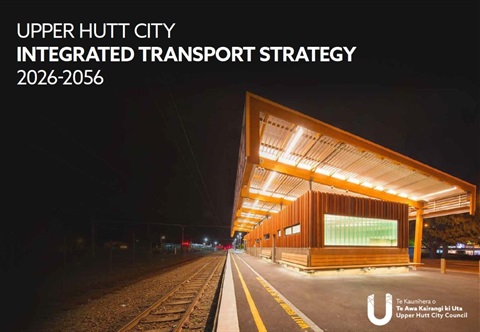
A new 30-year Integrated Transport Strategy that will guide how the city responds to growth, improves access and makes decisions about future transport investment has been adopted by Upper Hutt City Council.
Rather than prescribing a one-size-fits-all solution, the strategy takes a place-based approach, recognising that the transport needs of the city centre, residential neighbourhoods, rural communities, industrial areas and transport corridors are different.
The strategy will guide future decisions about roads, public transport, walking, cycling, parking, resilience and infrastructure investment as Upper Hutt grows and travel patterns change.
Tim Harty, Group Manager Operations, says the strategy is about making practical choices that work for the people who live, work and travel in Upper Hutt.
“Transport affects almost every part of daily life, from getting to work or school, accessing healthcare and services, moving goods, visiting family and taking part in community life,” Harty says.
“We know there is no single answer. People have different needs depending on where they live, where they are going and how they travel. This strategy gives us a clearer framework for making decisions and prioritising investment where it will make the greatest difference.”
The strategy identifies key challenges facing Upper Hutt over the next 30 years, including population growth, pressure on the transport network, access and connectivity, resilience to natural hazards and climate change, environmental impacts, safety and affordability.
It sets out seven outcomes for the city, including connected places, easier access for everyone, reliable transport, a resilient network, a sustainable future, safe and healthy communities, and smarter investment.
A key feature of the strategy is a new framework for future decision-making. Before major transport investments are considered, Council will assess the problem, understand the needs of the place, use evidence, consider the benefits and trade-offs of different options and look for opportunities to partner with other organisations and secure external funding.
The strategy does not commit Council to building specific roads, bridges, cycleways or other projects. Those decisions will continue to be made through processes such as the Long Term Plan, asset management planning, business cases and funding applications.
Mayor Peri Zee says this distinction is important.
“Adopting a strategy is not the same as approving a list of projects,” she says.
“It gives us a direction and a way to make better decisions as needs, technology, funding and community priorities change. Our focus now is on using this strategy to make thoughtful, evidence-based decisions about where investment will have the greatest benefit for Upper Hutt.”
The strategy also recognises the importance of maintaining and improving the existing network, particularly as infrastructure ages and extreme weather events place increasing pressure on roads and transport connections.
For rural communities, where people can be more dependent on private vehicles and alternative routes are limited, resilience and reliable access will remain particularly important.
In urban areas, opportunities may include improving access to public transport, walking and cycling connections and making better use of existing infrastructure.
The strategy will support future Council planning and investment decisions and will be reviewed as Upper Hutt continues to grow and the transport environment changes.
Learn more about Integrated Transport Strategy 2026-2056
Source: Upper Hutt City Council
10/10/26

