My family has been part of Upper Hutt for nearly a hundred years. The Goodwin family founded the Guildford Timber Company and helped build the suburb of Pinehaven. Their descendants, have been planting native trees, controlling predators, and quietly caring for the forest above Silverstream ever since. Streets in Pinehaven bear their names. The forest bears their fingerprints.
So when I talk about the Silverstream Forest Housing Development, I’m not talking about a developer arriving from outside to extract value and leave. I’m talking about a family that has spent over a century investing in this place and now wants to share something genuinely extraordinary with the people who live here.
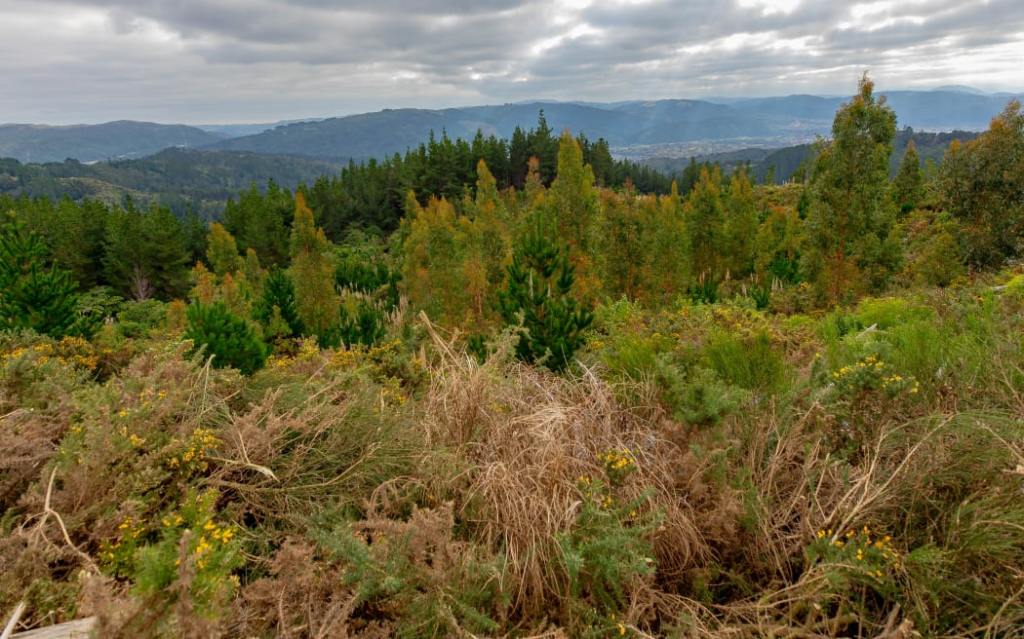
The Silverstream Forest site covers 313 hectares above Pinehaven and Silverstream. It is one of the last large greenfield sites in single ownership in the Wellington region. It has been earmarked for housing growth in every major Upper Hutt City Council strategy since 2007. Our plan is to develop roughly 35% of it for housing – around 1,500 to 2,000 new homes, built over 15 years – and turn the remaining area into accessible green space, including walking tracks, mountain biking trails, children’s playgrounds and protected native forest reserves.
That last part doesn’t get nearly enough attention. We are proposing to open 182 hectares of regenerating native bush to the public – land that is currently private and inaccessible to the general public. Ruru have been spotted on the site. Kererū, tūī, kārearea, and korimako are all present. We already run predator control across the forest, and our long-term ambition is to create habitat suitable for kiwi reintroduction. This is not a development that threatens nature. It is a development that funds the protection of it.
The recreational opportunity alone is significant. A new 16km network of walking and mountain biking trails, connected to the Hutt Valley’s existing trail systems and extending toward the Remutaka Rail Trail, would become one of the finest recreational assets in the region. The Wellington Mountain Bike Club already backs the project for exactly this reason.
On the economic side, the numbers are straightforward. This is a minimum $1.5 billion private investment in the Wellington region. We will spend roughly $180 million on new infrastructure – roads, water, wastewater, stormwater systems. Up to $480 million will flow into the local economy through construction, materials, and services. Two hundred permanent construction jobs will be created for the 15-plus-year life of the project. The Hutt Valley Chamber of Commerce supports the development for these reasons, and the business community is ready to back it publicly.
Now, the question I hear most often: what does it cost ratepayers? The answer is nothing. All infrastructure is privately funded by GTC – not a dollar of ratepayer money is required. In fact, the water infrastructure we will install to service the development would include upgrades that benefit the wider Silverstream and Pinehaven area. These communities have been waiting for those improvements for years.
I understand that growth can feel unsettling. When people look at the hills above Silverstream and imagine 1500-plus new homes, it’s natural to worry about traffic on already-busy roads, or whether the stormwater system can cope, or whether the schools and GP clinics will stretch. These are fair questions and we take them seriously.
The development is engineered to be stormwater-neutral. Unlike today, the water will be managed and that means the risk of run-off and landslips will permanently reduce. Retention ponds, rainwater tanks, low-impact surfaces, and extensive native vegetation planting are all integral to the design. If the engineering doesn’t stack up, the project simply will not receive consent.
The development is deliberately staged, with the first neighbourhoods designed specifically for people who will walk to Silverstream Station and commute by train. The site is a 10-minute walk from the station, far closer than most Wellington suburbs are to their local rail link. That is not an accident; it is the design, as we want to enable residents to reduce car dependency.
A new suburb of this scale creates the population base that justifies investment in new schools, medical facilities, and community infrastructure. Upper Hutt’s planners have known this growth was coming since 2007. That is exactly why they planned for it.
The Wellington region needs 90,000 more homes over the next 30 years. Upper Hutt’s share of that is 8,000. So growth is coming. The question is how we manage it. Silverstream Forest is ideally located. It is connected to rail, adjacent to established communities, privately funded, and designed by a family that has a century of skin in the game.
Our city’s councillors now face a clear decision and can say yes to something that will define Upper Hutt for generations. New homes, new jobs, new trails, protected native forest, and not a cent from ratepayers.
An important enabler of this project is the Silverstream Spur. Building a public road would require access through a small portion (roughly 3 hectares) of unmanaged pine forest. In return, it unlocks access to more than 180 hectares of native bush, along with the homes and infrastructure the region needs. That is the simple trade-off in front of Council, for a legacy that will last forever.
Matt Griffin sits on the family trust that owns and manages the Silverstream Forest through the Guildford Timber Company. His ties to the land go back to his great-grandfather.
A “thank you” to Matt Griffin for sending this article to The Upper Hutt Connection.
15/05/26
 The Upper Hutt Connection