
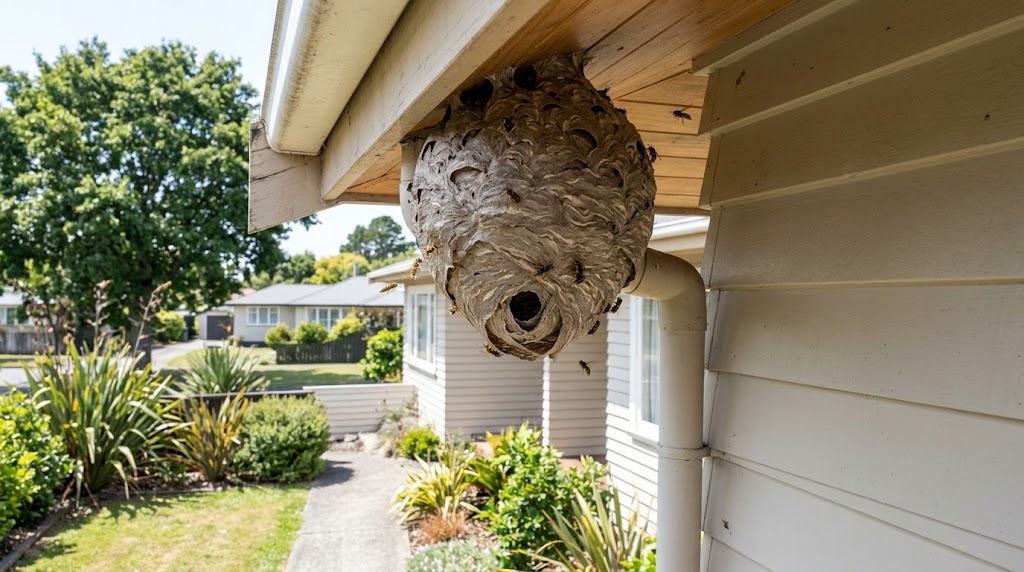
As spring arrives, so do queen wasps emerging from winter hibernation and searching for places to start new nests. Taking action early can prevent a small problem from turning into a large and costly infestation later in the season.
Pest control experts advise that eliminating a queen wasp before she establishes a nest is one of the most effective ways to reduce wasp numbers. If the queen is killed before her first workers emerge, the colony cannot develop. Once a nest is established and hundreds or even thousands of worker wasps are present, locating and eradicating it becomes significantly more difficult and expensive.
If a queen wasp enters your home, quickly close doors and windows to prevent escape routes and carefully spray the insect. Acting promptly can stop a new colony before it begins.
Understanding the Queen Wasp’s Life Cycle
Spring: Emerging and Nest Building
After spending winter in hibernation, fertilised queen wasps emerge and begin feeding. They search for sheltered locations such as roof eaves, wall cavities, sheds, or banks where they can construct a small paper nest made from chewed wood fibres and saliva.
The queen lays her first eggs and cares for the developing larvae herself. After around four to six weeks, the first generation of sterile female workers emerges and takes over nest duties.
a {
text-decoration: none;
color: #464feb;
}tr th, tr td {
border: 1px solid #e6e6e6;
}tr th {
background-color: #f5f5f5;
}Summer: Rapid Colony Growth
Once workers are present, the colony expands rapidly. Workers forage for food, collect building materials, and care for larvae, while the queen focuses almost entirely on laying eggs. During this stage, nests can grow into large colonies containing hundreds or even thousands of wasps.
Autumn: Reproduction
As the season progresses, the colony shifts its focus from producing workers to producing new queens and male drones. These reproductive wasps leave the nest to mate, ensuring the continuation of the species.
Winter: Dormancy
After mating, young queens seek sheltered locations to hibernate through winter. The old queen, workers, and drones die off, and the nest is abandoned. In mild climates such as parts of New Zealand, some nests may occasionally survive winter, but most do not.
A Simple Prevention Tool
One effective way to target queen wasps before colonies become established is through trapping.
EasyTRAP Hanging Wasp Traps are available from Mitre 10 for $9.98 (price accurate as of October 2026). For best results, bait the traps with fruit juice mixed with added sugar and place them outdoors from late August through early September. This timing coincides with the period when queen wasps are actively searching for nesting sites.
By focusing on queens early in the season, homeowners can significantly reduce the likelihood of dealing with large wasp nests later in the year, helping to make outdoor spaces safer and more enjoyable throughout summer.

